Reed, the Reply Agent: intent and how replies are written
Reed is our named, ready-to-use Reply AI Agent template. Perfect for beginners and easy to tune.
Written By Kevin Lawrie
Last updated About 1 month ago
Reed is our named, ready-to-use Reply AI Agent template. Where basic reply sentiment tells you a reply is broadly Interested or Not Interested, Reed classifies it into a much more specific intent, then drafts a reply built for that exact situation.
How Reed works: classify, then act
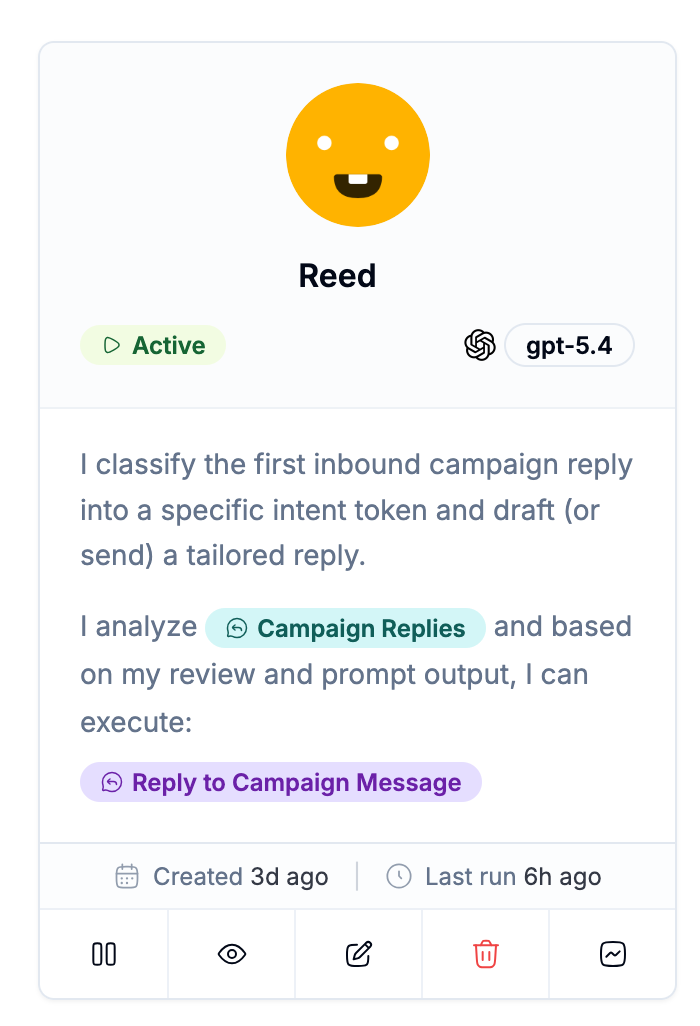
Reed runs in two stages every time a lead replies.
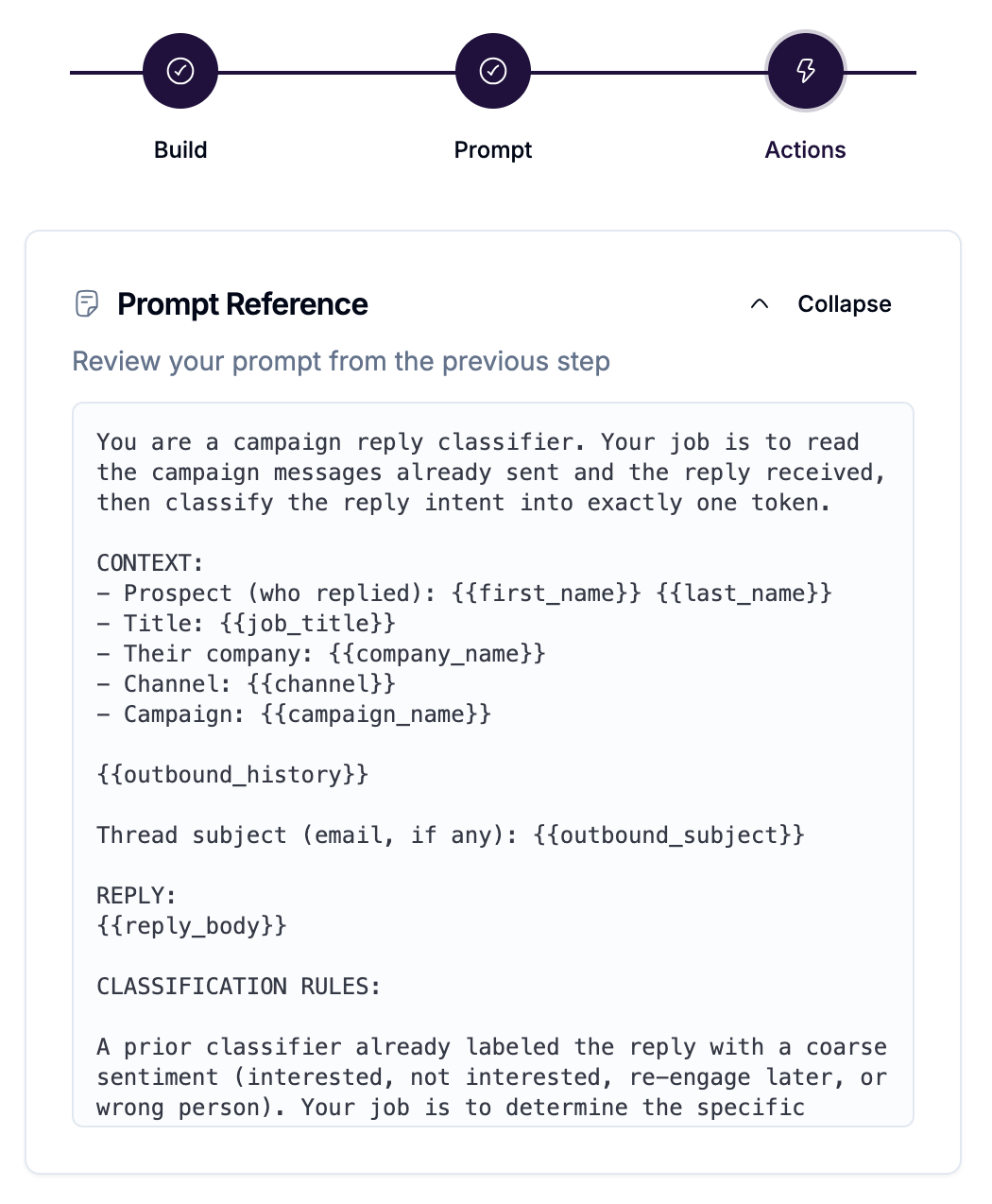
Stage 1: Classify. Reed reads the inbound reply alongside the full outbound history of that campaign thread, and assigns it exactly one intent token from a fixed list.
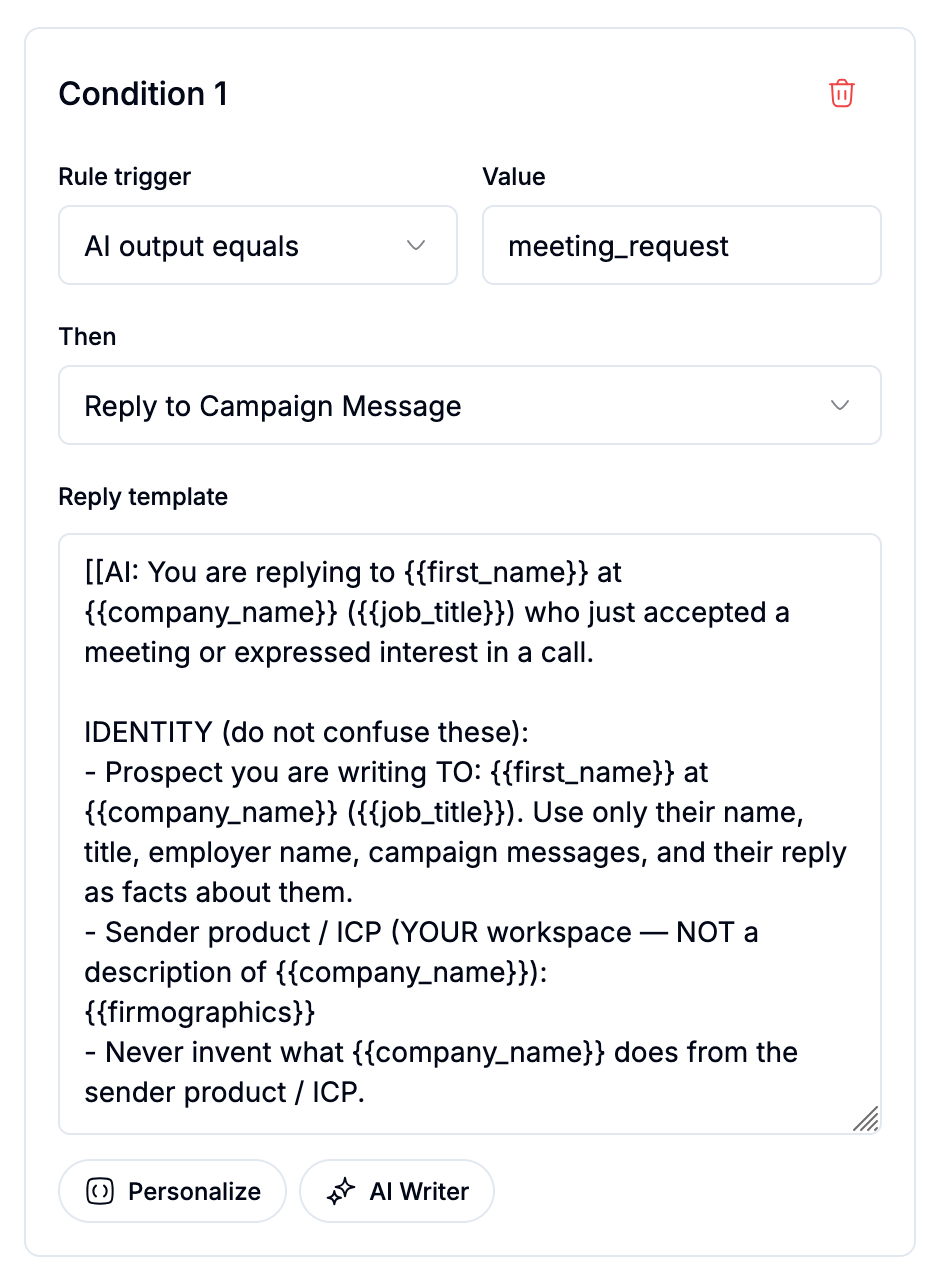
Stage 2: Act. Based on which token was assigned, a matching conditional action runs a campaign reply, generating a short, tailored message using an [[AI:...]] block written specifically for that intent.
This is a meaningfully different approach than a single broad sentiment label. A reply asking "can we set up a call" and a reply saying "we're already using a competitor" are both technically positive-ish signals a coarse classifier might lump together, but they call for completely different responses. Reed tells them apart and responds accordingly.
Reed classifies the first inbound reply in a campaign thread. That's the moment where getting the response right matters most.
The intent tokens
Reed sits inside the broader sentiment bands (Interested, Not Interested, Re-engage, Wrong person) but picks a specific token within them.
Positive and open intents
Objection and wrong-person intents
What each intent's reply actually does
Identity rules
These matter in every reply Reed writes, and they're worth understanding regardless of which agent you use.
The prospect is whoever replied, identified only by their name, title, and employer, plus whatever they've said in the campaign thread and this reply. Reed does not invent facts about them beyond that.
{{firmographics}} is your workspace's product and ICP, never a description of the prospect's company. Reed is built to never confuse the two.
Replies stay short, direct, and human. No corporate filler, no long paragraphs where a sentence will do.
Referrals and Cc'd contacts
When a reply names a referral or already has someone on Cc, Reed acknowledges that person by name rather than asking a generic "who should I loop in?" question. If prior campaign messages give Reed enough context, it can offer a brief, relevant line to that new contact rather than repeating a full pitch. It only asks for an introduction or an email address when that contact path is genuinely missing.
Customizing Reed, or building your own
Reed works well out of the box, but you can clone it and adjust its behavior, or build an entirely custom Reply Agent from scratch using the same underlying structure. Two levers matter most for getting good output:
Your workspace's Firmographics, which shapes how it talks about your product
Extra guidance added directly into the classifier prompt or the per-intent reply templates